
Hexascapes - Block Puzzle
EASY PLAY GAME TECHNOLOGY LIMITEDCasual
4.9163.00 Reviews
- Version
- 1.5.1
- Installs
- 100.00K
- Age Rating
- Everyone
Screenshots
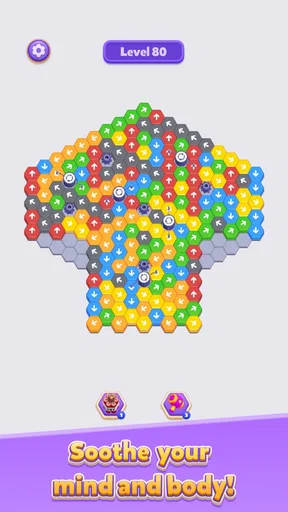
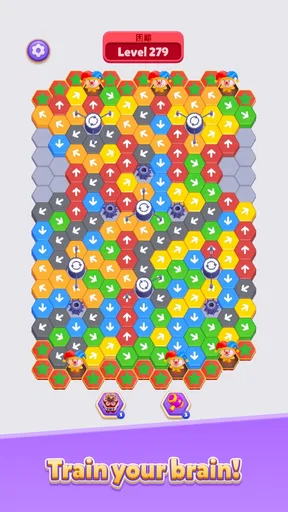
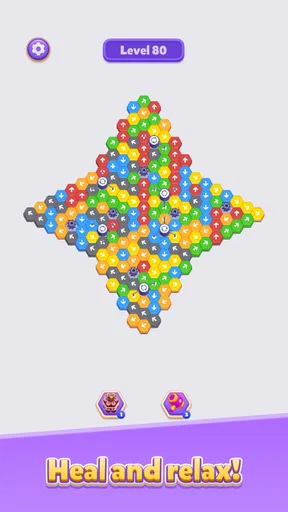
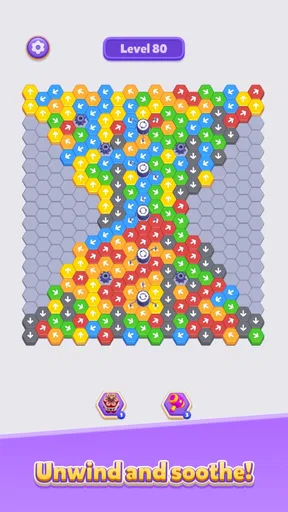
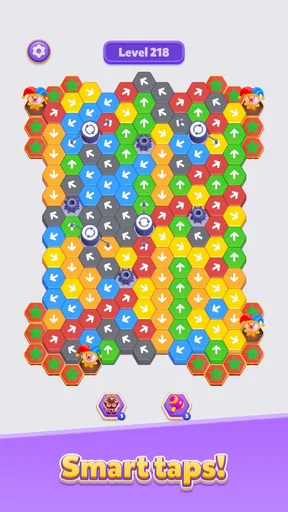
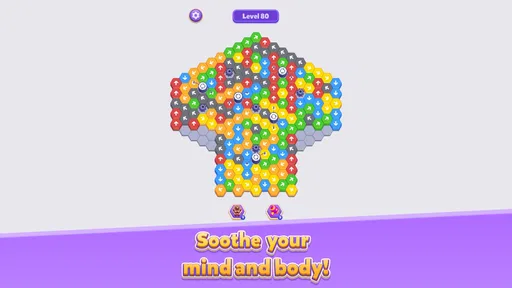
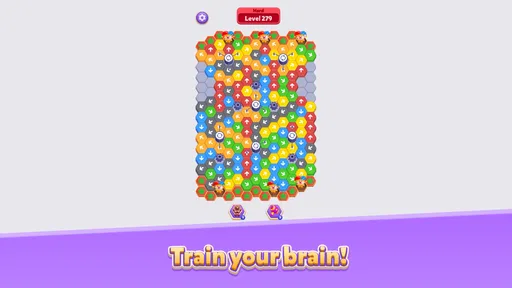
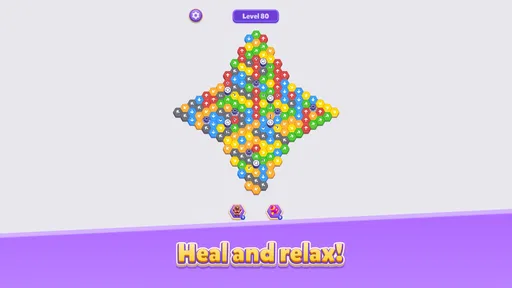
Our Review of Hexascapes - Block Puzzle
 Analysis by Appyee
I expected a simple time-filler from Hexascapes - Block Puzzle, but its appeal is more specific than that. It is a casual hex-block game built around the pleasant little moment of seeing an empty shape become complete. There is no long setup to learn, no character to manage, and no story demanding attention before I can play. I can open it, make a few moves, and feel that I have done something satisfying even when I only have a short break.
That makes it a good candidate for the spaces between other activities: waiting for transport, taking a breather after work, or winding down before sleep. The game is free, aimed at Everyone, and developed by EASY PLAY GAME TECHNOLOGY LIMITED. Its store summary presents it as a way to clear hex blocks and relax, but after spending time with it, I think the more useful description is this: it is a low-pressure puzzle for people who want a clear task with an easy stopping point.
Why the first few minutes work so well
The strongest part of the design is its immediate readability. Hexagonal pieces give the familiar block-puzzle idea a slightly different visual and spatial feel, yet the basic objective remains approachable. I do not need to memorize a complicated rule set before making progress. The board communicates what needs to happen, and the satisfaction comes from fitting pieces into the open spaces rather than from learning a large collection of systems.
This simplicity matters when I am playing with half my attention. Many mobile games begin with several screens of instructions, rewards, currencies, or character choices. Here, the attraction is much more direct. I can concentrate on the shape in front of me, try a placement, and immediately see whether my thinking was useful. That short distance between decision and result is what gives the game its relaxing quality.
The hexagonal layout also prevents the experience from feeling exactly like every square-grid alternative. The pieces ask me to look at angles and gaps differently. A space that seems large at first may be awkward once the surrounding edges are considered, so the game rewards a little visual patience. I found myself rotating my attention around the board mentally, checking how one placement would affect the remaining room instead of dropping pieces randomly.
The best reason to try it is its low mental entry cost: I can start without committing to a long session. That does not mean every board is effortless. It means the game explains itself through play, which is more useful than a tutorial when I only want a few quiet minutes.
A rhythm made for small breaks
Hexascapes fits naturally into short sessions because its central activity is divided into small decisions. I can place one piece, pause to inspect the board, and continue when I am ready. That rhythm feels different from games that push constant movement or demand a rapid response. There is room to think, but not so much complexity that the puzzle becomes a project.
In an everyday situation, I might open it while waiting for a coffee or during a few minutes between appointments. I would not need to prepare headphones, remember a plot point, or worry about losing track of a team. I can play a little, stop, and return to whatever I was doing. That makes the game especially suitable for people who want entertainment that respects interruptions rather than punishing them.
The pleasure is also immediate. Completing a useful section of the board gives me a visible sense of order, and that can be enough when I am not looking for a major achievement. The game does not need to be dramatic to be rewarding. Its appeal is closer to tidying a small space or solving a compact visual problem: the result is modest, but the feeling arrives quickly.
There is a trade-off here. Players who need constant novelty may find the basic placement loop too restrained. The same kind of satisfaction that makes it calming can make it feel repetitive if I play for a long stretch. I would recommend treating it as a series of brief visits rather than expecting it to carry an entire evening by itself.
How I handle a board before placing anything
One useful habit is to avoid filling the easiest-looking gap immediately. My first impulse in a block puzzle is often to place the piece that fits somewhere obvious, but that can leave an awkward pocket for later. With a hexagonal board, I get better results by scanning the edges and narrow corners first. If a piece has only one sensible home, I treat that placement as a priority and keep the flexible pieces available for later.
I also try to preserve a broad central area instead of building an attractive but disconnected cluster. This is a small change in approach, yet it improves the quality of my decisions. A move that completes a visible section is not always the best move if it blocks the only route for a larger piece. The game becomes more interesting when I choose future flexibility over immediate neatness.
Another practical tip is to pause after every major placement and reassess the whole board. Looking only at the latest gap encourages tunnel vision. A quick full-board check helps me notice whether I am creating isolated spaces that no later piece can use. This is not advanced strategy in the competitive sense, but it is the difference between casually placing shapes and actually reading the puzzle.
These habits also show why the game can work for different ages. Younger players can focus on matching shapes and completing spaces, while more experienced puzzle fans can think about order, remaining options, and the cost of closing off an area too soon. Since the content rating is Everyone, it is positioned as a broadly accessible game rather than one aimed at a narrow audience.
Stopping, returning, and keeping the game in perspective
For me, interruption tolerance is one of the most important tests for a casual mobile game. Hexascapes succeeds because its appeal does not depend on a long emotional build-up. If I have to put the phone down, I do not feel that I have abandoned a mission or let other players down. When I return, the board itself tells me what I was considering, so getting back into the session is straightforward.
That makes it a better fit for fragmented time than many match-based or story-driven games. Competitive alternatives can be more exciting, but they often ask for a protected block of attention. Story games offer richer progression, yet they may be less comfortable when I am constantly interrupted. Even other puzzle games can create pressure through timers or rapidly changing challenges. Hexascapes is more comfortable when my day is unpredictable.
The downside is that a gentle pace can reduce urgency. If I enjoy the tension of a countdown, the drama of a narrow escape, or the satisfaction of beating an opponent, this game may feel too quiet. It is not trying to replace a fast arcade title or a deep strategy game. Its strength is precisely the absence of those demands.
I would also be selective about when I play it. It is useful during a short reset, but it may not be the best choice when I need to stay mentally sharp for another task. A puzzle that feels calming can still absorb more attention than expected once I start searching for the next placement. I use it when I want a small mental break, not when I need to keep my mind completely free.
What keeps the loop from becoming empty
The replay value comes from re-solving the placement problem, not from a large amount of outside content. Each board asks me to reconsider space, order, and risk. That is enough for repeat sessions when I enjoy the process itself. I can return because I like the act of making a messy arrangement gradually work, rather than because I am chasing a complicated collection of unlocks.
Still, this distinction matters. If I need a strong sense of progression, the loop may not satisfy me for long. Games with campaigns, levels tied to a story, or a large variety of mechanics will offer more obvious reasons to continue. Hexascapes is better understood as a reusable mental snack. It can be rewarding many times, but the reward is in the moment-to-moment puzzle rather than in a grand destination.
To get more from it, I recommend changing the way I judge a session. Instead of asking whether I played for a long time, I ask whether the board gave me a few decisions worth thinking about. That mindset suits the game. It also prevents the repetition from becoming a disappointment, because I am not expecting every return to introduce a completely new activity.
There is a subtle benefit in this kind of repetition: it lets me notice my own habits. I can see whether I rush toward easy completions, whether I protect open space, and whether I recognize restrictive pieces early enough. The game does not need to announce a lesson for me to learn from it. The board quietly exposes the consequences of my choices.
Who should download it, and who should skip it
I would recommend Hexascapes to someone who wants a free casual game that can be understood quickly and played in short bursts. It is particularly suitable for players who like visual organization, gentle problem-solving, and the feeling of turning an incomplete board into a finished one. It can also work well as a shared family-friendly option because the basic activity is easy to explain without specialized gaming knowledge.
It is less suitable for anyone looking for a rich narrative, competitive multiplayer pressure, fast reflex challenges, or a deep progression system. If the main reason I play mobile games is to collect characters, build an elaborate world, or master a demanding strategy layer, this will probably feel too focused. A more feature-heavy puzzle title would be a better choice in that situation.
I would also skip it when I am already tired of block-placement games. The hexagonal format gives the familiar idea its own visual identity, but it does not completely change the underlying appeal. Players who have exhausted this type of puzzle may appreciate the presentation yet still find the central loop familiar. That is not a flaw, but it is an important expectation to set before installing it.
Device compatibility is reasonably broad: the game requires Android 6.0 or later. The current version is 1.5.1, and the free price lowers the barrier to trying it. I like that combination for a casual title because I can test the rhythm without making a financial commitment. The game has passed the one-hundred-thousand-install mark and holds a 4.9 average from around six thousand ratings, which suggests that its straightforward concept has found a receptive audience.
Those figures are encouraging, but I would not use popularity as a substitute for fit. A highly rated relaxing puzzle can still be wrong for someone who wants intensity or constant discovery. My own recommendation depends more on how I want to spend five spare minutes than on how long I plan to keep the game installed.
My practical verdict after living with the loop
What I appreciate most is the clarity of the experience. I know what I am doing, I can see the consequences of a move, and I can stop without feeling that I have damaged a larger run. That combination is harder to achieve than it sounds. Many casual games are easy to launch but noisy to inhabit; this one keeps the focus on the board.
The main friction is repetition. Once the initial novelty of the hexagonal shapes settles, the game has to rely on the quality of its puzzles and on my willingness to enjoy the same basic activity again. For short sessions, that is rarely a problem. During a long play period, I may start wanting more variation, stronger goals, or a different type of challenge.
I also think the game rewards restraint. It is tempting to treat every open space as an invitation, but the better experience comes from slowing down and preserving options. That makes it more satisfying for thoughtful players than for those who simply want to tap quickly through a sequence. The game is casual in presentation, yet it still has enough spatial friction to make careless decisions matter.
My final recommendation is simple: install it if you want a calm, immediately understandable hex-block puzzle for fragmented free time. Use it as a compact reset, not as a substitute for a full-featured adventure or competitive game. Hexascapes - Block Puzzle earns its place through short-session clarity, easy returns, and a clean sense of completion. For me, that is enough to make it a worthwhile free download, provided I accept that its charm comes from focused repetition rather than endless novelty.
Verdict
Strengths of Hexascapes - Block Puzzle
- Simple hexagonal grid makes the rules easy to learn.
- Short rounds work well for quick breaks or casual play.
- Colorful visuals keep the board clear and easy to read.
- Gradual difficulty provides a comfortable learning curve.
- Offline play is useful when you have no internet access.
Limitations of Hexascapes - Block Puzzle
- Later puzzles can feel repetitive once the mechanics become familiar.
- Limited move options may frustrate players seeking more variety.
- Small hexagonal pieces can be difficult to distinguish on smaller screens.
- Hints or extra attempts may be restricted by the game’s progression.
- Ads can interrupt the experience, depending on the version and settings.
Other Releases by EASY PLAY GAME TECHNOLOGY LIMITED
View All
FurrJam:Hop In!
Casual4.9
Similar Picks in This Category
View All
My Talking Angela
Outfit7 Limited4.2

My Talking Tom
Outfit7 Limited4.3

Pou
Zakeh4.2

My Talking Tom 2: Pet Game
Outfit7 Limited4.3

Candy Crush Saga
King4.6

Bridge Race
Supersonic Studios LTD4.1
Frequently Asked Questions
What is Hexascapes - Block Puzzle, and how do you play it?
Hexascapes - Block Puzzle is a relaxing puzzle game built around placing colorful hexagonal pieces on a board. The objective is to fit the available shapes together and complete lines or patterns to clear space and earn points. Unlike timed action games, it generally focuses on planning, spatial awareness, and finding efficient placements rather than quick reflexes.
Is Hexascapes - Block Puzzle suitable for beginners?
Yes, Hexascapes - Block Puzzle is easy to understand for new players because its core controls are simple: select a piece, move it to an open position, and place it on the board. However, later stages or higher-score challenges can require more careful planning. Players who enjoy gradual difficulty, short sessions, and casual brain training should find the learning curve comfortable.
Can I play Hexascapes - Block Puzzle without an internet connection?
The basic puzzle experience may be playable offline, which makes it convenient for travel, commuting, or situations without reliable mobile data. Nevertheless, certain features can depend on an internet connection, including advertisements, online rankings, cloud-related services, updates, or promotional content. It is best to test the game once after installation before relying on it completely offline.
Does Hexascapes - Block Puzzle contain advertisements or in-app purchases?
As with many free-to-download mobile puzzle games, Hexascapes - Block Puzzle may include advertising and optional purchases. Ads can appear between rounds or when using bonus features, while purchases may offer items such as ad removal, extra assists, or other convenience options. Before downloading, users should check the current store listing for the latest pricing and monetization details.
Is Hexascapes - Block Puzzle appropriate for children and casual players?
Hexascapes - Block Puzzle can be appropriate for children and casual players because it uses non-violent gameplay and encourages visual reasoning, concentration, and pattern recognition. Parents should still review the age rating, advertising content, and purchase settings on the relevant app store. If children use the app, enabling parental controls can help prevent accidental purchases or access to unsuitable advertisements.
Play our best games!


